
Boiler Pressure, what you need to know.
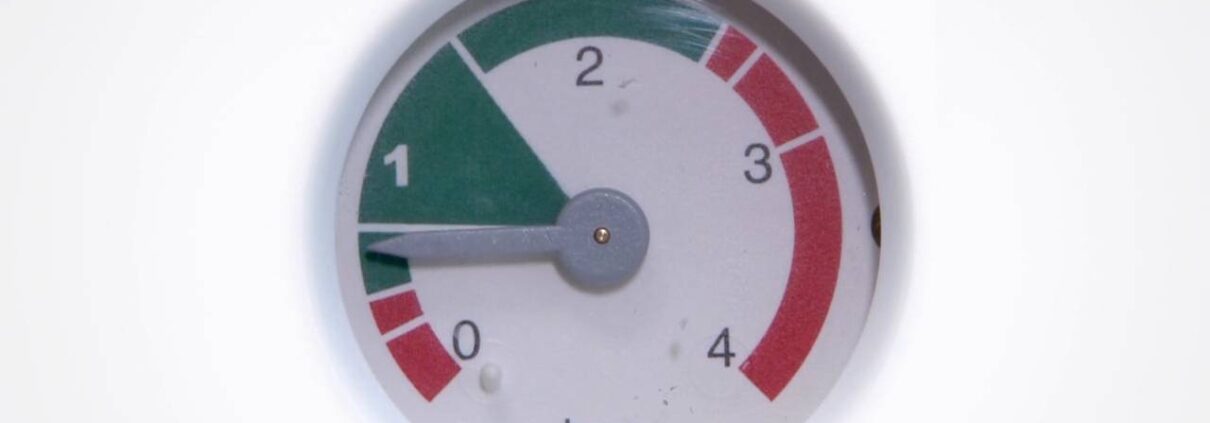
Is your Boiler Pressure too high?
There are quite a few things that can affect your boilers pressure, causing it to be higher than it should be.
1. The external filing loop is letting-by water
2. Your boiler may have a faulty expansion vessel
3. The heating system has been overfilled with water
4. The boiler could have a faulty plate heat charger
What Boiler Pressure is too high?
It can be difficult to know if it’s never happened to you before. Anything above 1.8 bar isn’t really ideal, so it’s best to sort things out then before it gets any worse. Once it starts getting to around 2.3 things begin to get a little more serious and when your boiler hits 3 bar, it’ll usually be in the red zone on the pressure gauge.
If the unit locks out and displays a fault code, we’d suggest contacting one of our Gas Safe boiler engineers.
What Pressure Should My Boiler Be?
Now you know if your boiler pressure is too high, it’s time to know what pressure it should be. Usually you’ll find that most boiler manufacturers recommend a pressure of 1.3 bar. However, this can vary a little sometimes so it’s best to check you owners manual.
What Leads To A High Boiler Pressure?
Find below a list of contributing factors that could cause a high boiler pressure;
1. The Boiler Pressure Rises:
You should expect to see your boilers pressure gauge rise by about 0.3 bar when the hot water or heating is on as parts naturally expand when they heat up. You can ask one of our engineers to check the boilers pressure during the next service – however small rises in your boilers pressure are quite normal. If it ever rises above 0.5 bar then we’d recommend contacting our team.
2. The Heating System Has Been Overfilled
What we tend to hear about the most when it comes to a boilers pressure being too high is the heating system being overfilled. When topping up water via the external filling loop, you can add pressure to the boiler. If too much water is added you can overfill the system which will put an unnecessary strain on the whole heating system, meaning that the copper joints are more likely to fail, the pumps seals are likely to blow and cracks in the heat exchanger can even appear.
To fix this scenario, simply drain the water from the heating system (bleeding the system).
If you struggle to resolve the issue yourself, please feel free to contact us and we’ll get one of our Blackpool Gas and Heating Engineers out to help you resolve the issue.


